Emerging Director Jada George Is On The Rise
Emerging ‘Where The Children Go To Play’ Director Jada George Is On The Rise
Emerging director Jada George is making waves at festival with her short film "Where The Children Go To Play."
Share the post
Share this link via
Or copy link

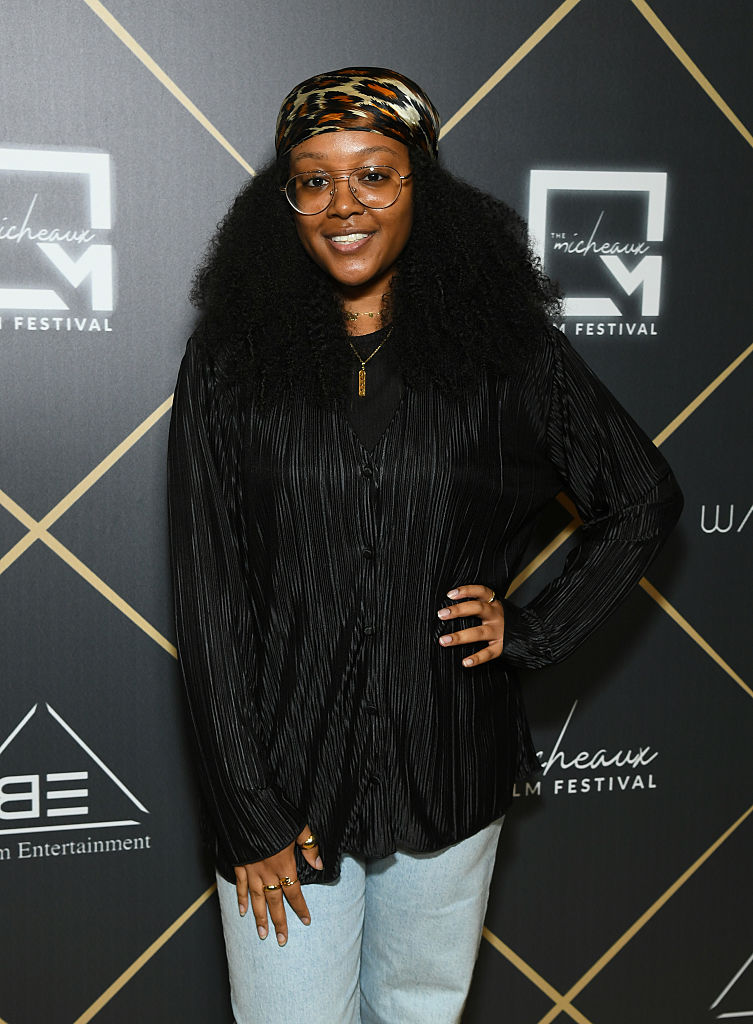
At 28-years-old, Jada George is establishing herself as a director to watch. The Hampton University graduate made her directorial debut with “Where The Children Go To Play,” a short film making waves at festival. It has already won the “BEST US SHORT” Award at Echelon Studios International Film Festival and is listed to appear at the upcoming Brooklyn Sci-Fi Film Festival and Flickers Vortex Film Festival. According to the synopsis, the chilling dystopian short film explores what it means to be “worthy” of survival in a system governed by cold, synthetic judgment.
We spoke to George about the obstacles she’s had to overcome as a young emerging director, the positive response the film continues to receive and established directors who inspire her. Get into our conversation, below:
Related Stories

What are some obstacles and roadblocks you’ve had to overcome as a young independent director?
I’ve had to overcome the feeling of self-doubt and imposter syndrome, being a young director. There have been so many times where I’ve wanted to create something but would talk myself out of it thinking that I wasn’t ready. Watching so many talented directors participate in film festivals and film programs to further their careers would have me comparing myself to them even when I didn’t realize it. From looking at those who’ve attended major film schools like NYU or USC, or taking a look at other accolades like time spent shadowing directors on major sets, I simply felt I needed to have those same experiences before I could apply. After years of holding myself back I finally realized that the only thing stopping me was me and I truly began to understand what people meant when they would say that “comparison is the thief of joy”. What makes you the most unique storyteller is that you are bringing your own perspective which is based on what you’ve lived and learned. You are ready today, as long as you feel you can commit to bringing a story to life from start to finish. No longer are the days where we need to ask for permission to create. There are so many resources available for independent filmmakers and the only difference between “not making it” and “making it” in this industry is quite literally, making it. Make the project.
What should viewers know about ‘Where The Children Go To Play?’ What has been the response to the film?
It’s been great receiving live feedback from viewers who have been at our “Where The Children Go To Play” screenings. People have been able to see themselves in our characters which forces them to think about how they would’ve answered some of the questions asked by the proctors in our story. I want viewers to go in with an open mind, willing to challenge their own ideas and locate what influenced their beliefs. Was it something that was taught and passed down from family members or is it something that you truly believe? Too many times, we’ve witnessed negative and harmful qualities being passed down from generations, social matters like politics, racism, classism, etc. Now more than ever it is important to break generational curses and that requires us to dig deep, finding the root. “Where The Children Go To Play” launches us into the future of technology, towards a reality where basic human rights are tested and society is governed by synthetic entities like artificial intelligence. Our candidates begin to question their morals under the pressures and conditions provided by the proctors who have one job, and that’s to intimidate and manipulate. I simply want this film to start conversations, from morality to technological progression, and I want us to analyze where we are today as a nation, and if we are heading in the right or wrong direction.
What drives your fascination with dystopian societies?
I am interested in dystopian worlds because I think it’s one of the greatest tools for highlighting topics that most people try to avoid. It allows for you to take controversial themes and add dark twists to it in a way that villainizes certain ideations. This forces us to see the negative results in a way that makes it hard to turn a blind eye. Dystopian worlds allow for you to take advantage of cinematic elements that rely heavily on special effects and technologically advanced props, which is something that was new to me. I enjoyed working with my sound designer and composer, Dominic Frederick, to audibly bring our world to life. There are many minor details that’ve been added to this film to enhance certain feelings of eeriness that help us drive the tones of our story.
What did you learn going from director’s assistant to director?
One of the main things that I’ve learned from going from director’s assistant to director has been the importance of prep. In this industry, time is money and an easy way to get on the producer’s bad side is to show up unprepared to the point where you push production behind. From storyboarding to shot listing, to blocking and location scouting, it is important that you know the story you are trying to tell and have a variation of ways you hope to execute it. This makes communications with your cast and crew easier which will allow for them to trust you as their director, which will make the day run smoother.
How has the landscape of directing changed for Black women in the recent years?
I think there are more opportunities to show up in the film industry as a Black woman, compared to how it was not even 5 years ago. Power players like Quinta Brunson and Issa Rae have proven time and time again that we too can successfully bring stories to life from script to screen and do it in a way that is authentic to us. I am grateful to be existing in this day and age where the doors have been opened and the seat is waiting for me at the table. It has created a sense of purpose for me, as I know that my job as a filmmaker is to broaden our identity and show the world that we have more to offer than the stereotypical characters that they are used to seeing. We can exist in all spaces, as we do exist in all spaces, and the beauty of today is that we are no longer waiting for permission to tell our story. We are taking our narratives back and creating realities that allow for us to involve ourselves in the magic that is filmmaking. No matter the genre, we are more than capable of stepping into the leading roles and connecting with the world through the vulnerability that makes us who we are. I am excited as we are still only at the beginning of this new revolution, and I hope to remain part of the movement as I plan to stay committed to the progression of my community.
Who are some directors you look up to?
I am inspired by filmmakers like Gina Prince Bythewood, Wes Anderson, Kenny Ortega, and Steven Spielberg. Something that all of these directors have in common is their unique approach to storytelling. From shot composition, framing, and coloring to the specific types of stories these directors tell, I could name a project from each that has inspired me to become a director. I want to create stories that provide a level of escapism to the viewer. I want people to go on a journey when they watch films that I direct, and I want them to be moved by each shot. Whether it’s a feeling or the overall look, I hope to create my own unique signature.
What advice do you give to aspiring directors?
Two things that I would advise for aspiring directors is to network across and learn to become a problem solver. 80% of the job is putting out fires, balancing schedules, and keeping the ship afloat. You are in control of the flow of a set so rather than focusing on issues, be solution based. Always remember, If you begin to panic, the whole crew will begin to panic. Filmmaking is a collaborative sport and the relationships you build is more important than money or equipment. Nurture your relationships and treat everyone you meet with respect. As you rise in the industry, the circle gets smaller and smaller and you never know where your next opportunity will come from. So lead with kindness and make sure you’re someone that people want to work with.
Emerging ‘Where The Children Go To Play’ Director Jada George Is On The Rise was originally published on hellobeautiful.com


